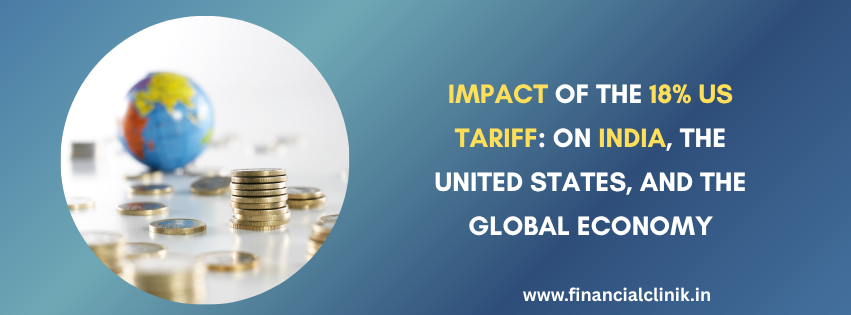
Impact of the 18% US Tariff
What Was Before vs What Is Now?
The Changing Impact of Trump’s Import Policy
A few years ago, trade relations between the United States and India were relatively simple and open.
Indian industries found it easier to enter the American market.
However, after Donald Trump became the President of the United States, the situation changed significantly.
With the “America First” policy, import-export rules became much stricter.
What Was Before?
Before Trump’s presidency, the U.S. trade policy was based on free trade.
Developing countries like India could export goods to the U.S. at lower import duties
India benefited from the GSP (Generalized System of Preferences), receiving tax concessions on many products
Indian textiles, pharmaceuticals, auto parts, and IT services were competitively priced in the U.S. market
American consumers got quality products at lower prices
What Is the Situation Now?
After Donald Trump took office, major changes were introduced in U.S. import policies.
He strongly believed that cheap imports were harming American industries and jobs.
As a result, the following decisions were made:
Tariffs increased to 10%–25%, and in some cases up to 18%
India’s GSP status was revoked
Strict import policies imposed on countries like China, India, and Mexico
Strong push for “Make in America” and domestic production
Impact of These Changes
Impact on India
Export costs increased, especially affecting small and medium enterprises (SMEs)
Demand declined in certain sectors
A key lesson for India: avoid dependence on a single market and explore new global opportunities
Impact on the United States
Local industries received some protection
However, inflation increased for consumers
Imported goods became expensive, raising prices of everyday items
Impact on the Stock Market
Increased uncertainty in global markets
Export-oriented companies faced pressure
Companies focused on domestic markets saw some benefit
A Shift in Global Trade Thinking
Earlier, global trade meant opportunity.
Now, global trade means strategy.
Although Trump’s import policy aimed to protect American industries,
its impact was felt across the world.
For India, this serves as a signal to:
Strengthen manufacturing capabilities
Build robust domestic industries
Explore new export avenues
What Should Investors Do?
Maintain a long-term perspective
Ensure portfolio diversification
Avoid making decisions out of panic
Why Every Family Needs a Financial Advisor Today
In today’s changing and uncertain economic environment, having a family financial advisor has become essential.
With:
Rising inflation
Changing tax rules
Market volatility
Increasing healthcare costs
Future needs like education and retirement
Financial decisions have become more complex.
A financial advisor helps by:
Balancing income, expenses, savings, insurance, and investments
Creating long-term financial plans
Providing guidance based on logic and facts, not emotions
Helping avoid costly financial mistakes
With proper planning:
Financial security improves
Mental stress reduces
Life goals can be achieved with confidence
Harshal Kothari
International Certified Finance Coach
+91 9006004700